Thalliant: A Romantic Handwritten Font for Small Business Branding
As a small business owner who designs my own packaging, writes Instagram captions by hand (well, digitally), and prints every thank-you card with care—I’ve learned that font choice isn’t just about aesthetics. It’s about tone, trust, and telling customers who you are before they even read a word. That’s why I reached for Thalliant: a graceful, expressive handwritten font from Script Amp that feels personal without sacrificing polish.
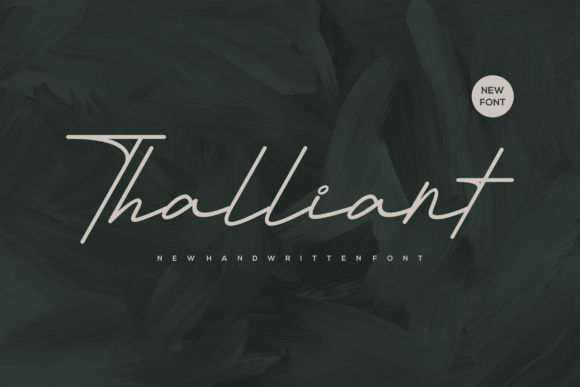
Thalliant is a script font with gentle curves, subtle contrast in stroke weight, and an organic rhythm—like elegant penmanship captured at just the right moment. It’s not overly ornate or difficult to read, and it carries warmth, sincerity, and quiet confidence. Whether your brand leans romantic, artisanal, minimalist, or soulful, Thalliant adds a human touch that resonates across customer-facing materials.
Here’s where it shines in real business use:
- Product labels and packaging—I used Thalliant for the scent name on my small-batch candle line (“Lavender & Linen”), pairing it with a clean sans serif for ingredients and net weight. The contrast felt intentional, not chaotic—and customers told me the label “felt like something I’d keep on my shelf.”
- Business cards and letterhead—A single line of Thalliant for your name or tagline creates instant recognition. No need for a full logo redesign—just thoughtful typography can elevate how people remember you.
- Café menus and boutique signage—Thalliant works beautifully as a display font for section headers (“Pastries,” “New Arrivals,” “Our Story”). It’s legible at 24–36pt on printed boards and digital kiosks, especially when set against light backgrounds with generous spacing.
- Social media graphics—On Instagram and Pinterest, Thalliant stands out in quote cards, launch announcements, and seasonal promotions. Its fluidity draws the eye faster than rigid type—and it scales well on mobile thumbnails when used sparingly (e.g., one line per image).
- Websites and email headers—I use Thalliant only for H1s and hero banners—not body text—so site visitors immediately sense the brand’s voice. Pair it with a highly readable sans serif (like Inter or Montserrat) for paragraphs, and your site feels both distinctive and functional.
Consistency matters more than complexity. When Thalliant appears in the same weight and style across your website banner, product label, and thank-you card, customers begin to associate that rhythm with your business. That’s how a font becomes part of your brand identity—not just decoration, but shorthand for your values.
That said, Thalliant isn’t meant for everything. It’s a display font, not a workhorse. Avoid using it for fine print, ingredient lists under 12pt, or long-form web copy. Its strength lies in moments of emphasis: a logo lockup, a headline, a monogrammed sticker, or a hand-lettered tag on a gift box. Think of it as your brand’s signature—not its entire vocabulary.
For practical pairing, lean into contrast. Thalliant pairs naturally with neutral, highly legible fonts: a friendly sans serif for body text and captions, or a refined serif for print brochures and packaging copy. Try Inter Bold for headlines alongside Thalliant Light, or Lora for editorial-style product descriptions. The goal isn’t visual harmony at all costs—it’s clarity with character.
Before committing, test Thalliant in context. Print a mock-up of your candle label at actual size. Load it into your Canva template and preview on phone and desktop. Paste it into your Shopify theme editor and scroll through a few pages. Does it hold up? Does it feel like *you*—not just “pretty,” but purposeful? If yes, you’re ready to go further.
Licensing is non-negotiable. Thalliant is a commercial font from Script Amp, and its license covers use in logos, packaging, social graphics, websites, and client projects—but always double-check the terms before applying it to merchandise, digital templates you sell, or physical products you manufacture in bulk. A clear license protects your business and supports the designers who make tools like this possible.
I’ve seen Thalliant bring cohesion to so many small brands: a wedding planner’s elegant proposal kits, a herbalist’s apothecary labels, a yoga studio’s seasonal workshop posters, a handmade soap maker’s ingredient callouts. In each case, it wasn’t the font alone that elevated the brand—it was how thoughtfully it was applied. Used with restraint and intention, Thalliant helps your business look professional not because it’s expensive or flashy, but because it feels considered, consistent, and human.
You don’t need a designer on retainer to build trust with typography. You just need one strong, expressive font—and the discipline to use it well. Thalliant gives you that expression. Now it’s up to you to give it context, clarity, and care.